

Does the Carnivore Diet Work for Bulking?
The short answer is: mostly no. The carnivore diet is certainly manageable, but it is not the most effective diet for building muscle or general health for the average person.
What is the Carnivore Diet?
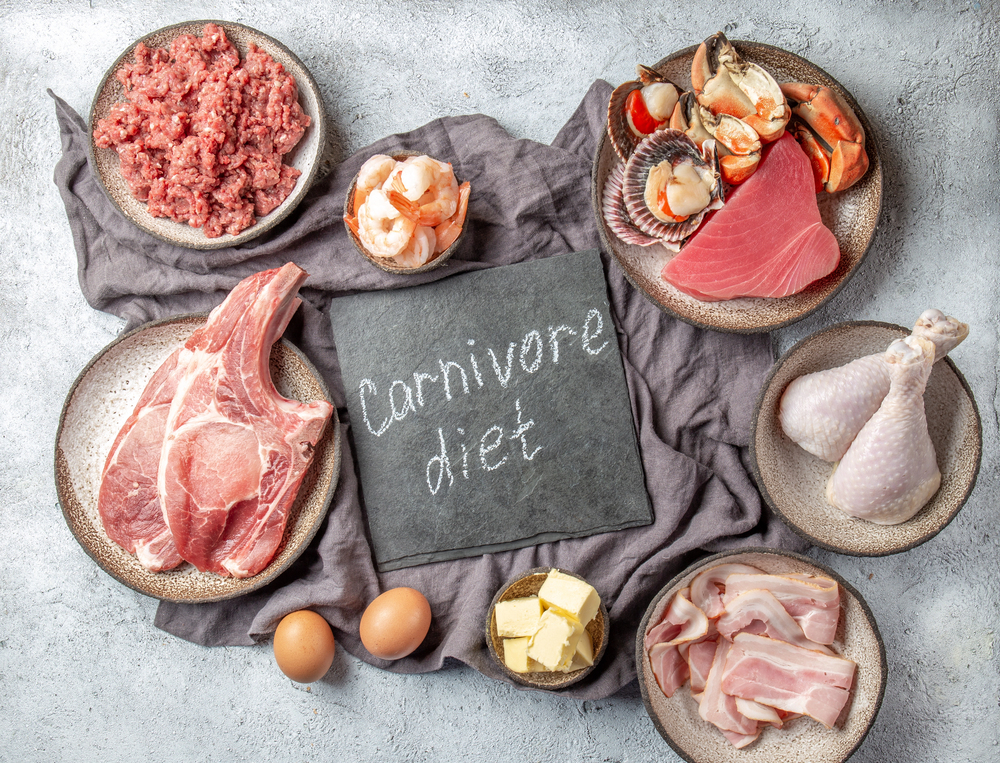
The carnivore diet is an all-animal products diet. People will follow different variations, but generally, these following foods are allowed: Meat such as red meat, bacon, poultry, fish, and shellfish, as well as eggs, butter, and milk[1].
Many popular blog sites will praise it as a “cheat code” to lean bulking, and a small number of doctors will sponsor the diet. However, the research we currently have available suggests that- while possible- the carnivore diet is not sustainable nor optimal for building muscle.
Motives for the Carnivore Diet for Bulking
The carnivore diet has grown in popularity over the last several years, particularly due to the influx of social media influencers. It’s easier to follow than a lot of other diets, and a lot of people with the budget are not necessarily opposed to the idea of eating steak and bacon for breakfast, lunch, and dinner.
There is logic to following the carnivore diet for muscle growth. Research suggests there is a positive relationship between protein intake and muscle mass when integrated with a resistance exercise program[2]. Adequate protein intake is crucial for strength and hypertrophy because it helps facilitate muscle protein synthesis, which refers to new muscle tissue growth.
Meat is the majority amongst the highest protein foods[6], but does that mean you should only eat meat? Considering the optimal amount of protein for building muscle is 0.73 to 0.9 grams of protein per pound of body weight[7], cutting out major food groups with an elimination diet is not necessary.
The Carnivore Diet is an Extreme Ketogenic Diet
The carnivore diet is essentially an extreme version of the keto diet. The keto typically calls for up to 10% carbohydrates which includes vegetables, whereas the carnivore diet brings a person’s diet to nearly 0% carbs[1]. Already, this diet does not sound very conducive to the intense training suggested for muscle-building.
Additionally, if the carnivore diet is followed using only red meat as some people choose, it would provide almost exclusively saturated fats. An imbalance of fat consumption with low “healthy fat” intake can raise low density lipoprotein (LDL), also known as “bad cholesterol”, as opposed to a traditional keto diet which allows for healthy fats from foods such as avocados and nuts.
Carbohydrates are the Body’s Primary Source of Energy
Carbs are the main source of energy for the body, and are used to fuel athletic performance and the type of training that leads to muscle growth during a bulk. Carbs are stored as glycogen, mostly in the liver and muscles, and serve as an energy source for training. Without carbs from the carnivore diet, the body replenishes glycogen stores with amino acids from protein and glycerol from fat through gluconeogenesis.
In a carnivore diet- essentially extreme keto- the liver will create ketones through ketogenesis, and the body will use them for fuel through ketosis. People’s bodies can eventually metabolically effectively adapt to the ketogenesis portion of the carnivore diet[3]. While fat is necessary for survival, most humans don’t need dietary carbs to survive and maintain basic bodily functions. So you can, but should you?
Nutrient Deficiencies and Other Health Risks
Medical Doctor Howard E. LeWine from Harvard Health Publishing claims that the carnivore diet can result in health risks such as “the increased risk of kidney stones, gout, and osteoporosis… and impaired kidney function”[1]
On a carnivore diet, nutrient intake including thiamin (B1), vitamin C, magnesium, calcium, and fiber fall significantly below recommended levels[4]. These are important to include in the diet for muscle building because they support energy, muscle contraction, muscle protein synthesis support, and muscle tissue repair.
Decrease in Testosterone
Carnivore diets can potentially decrease testosterone. A systematic review and meta-analysis conducted from 27 studies published on or before 2021 found that “high-protein, low-carbohydrate diets greatly decreased resting and post-exercise total testosterone”. The outcome was far less pronounced for moderate-protein, low-carbohydrate diets[5].
This means that diets that are made up of over 35% protein- which describes many carnivore diets- can negatively influence testosterone production. Low testosterone can lead to cardiovascular disease and diabetes. In addition to diseases which can reduce performance as a consequence, a decrease in testosterone can negatively influence both strength and muscle size more directly.
Conclusion
Bulking on the carnivore diet is possible, but it is arguably not optimal for the average person. The primary benefits of a carnivore diet relevant to muscle growth is the higher protein intake. However, the restrictiveness, health risks, nutrient deficiencies, potential decrease in testosterone, makes it less than ideal for long-term health and muscle building. Ultimately, a healthy, balanced diet with carbs, fats, and adequate protein is ideal for building muscle.
References
(1) LeWine, H. E. (2024). What is the carnivore diet? Harvard Health Publishing. https://www.health.harvard.edu/nutrition/what-is-the-carnivore-diet
(2) Carbone, J. W., & Pasiakos, S. M. (2019). Dietary Protein and Muscle Mass: Translating Science to Application and Health Benefit. Nutrients, 11(5), 1136. https://doi.org/10.3390/nu11051136
(3) Rahimi, N., & Gupta, S. (2025). Biochemistry, ketogenesis. In StatPearls. StatPearls Publishing. https://www.ncbi.nlm.nih.gov/books/NBK493179
(4) Goedeke, S., Murphy, T., Rush, A., & Zinn, C. (2024). Assessing the Nutrient Composition of a Carnivore Diet: A Case Study Model. Nutrients, 17(1), 140. https://doi.org/10.3390/nu17010140
(5) Whittaker, J., & Harris, M. (2022). Low-carbohydrate diets and men’s cortisol and testosterone: Systematic review and meta-analysis. Nutrition and health, 28(4), 543–554. https://doi.org/10.1177/02601060221083079
(6) Strength From Scratch. (2025). Protein intake: 9 high-protein foods to eat to increase strength. https://www.strengthfromscratch.com/2025/02/19/protein-intake-9-high-protein-foods-to-eat-to-increase-strength/ strengthfromscratch.com
(7) Strength From Scratch. (2025). How much protein should you eat in a day to gain muscle? https://www.strengthfromscratch.com/2025/04/13/how-much-protein-should-you-eat-in-a-day-to-gain-muscle/